


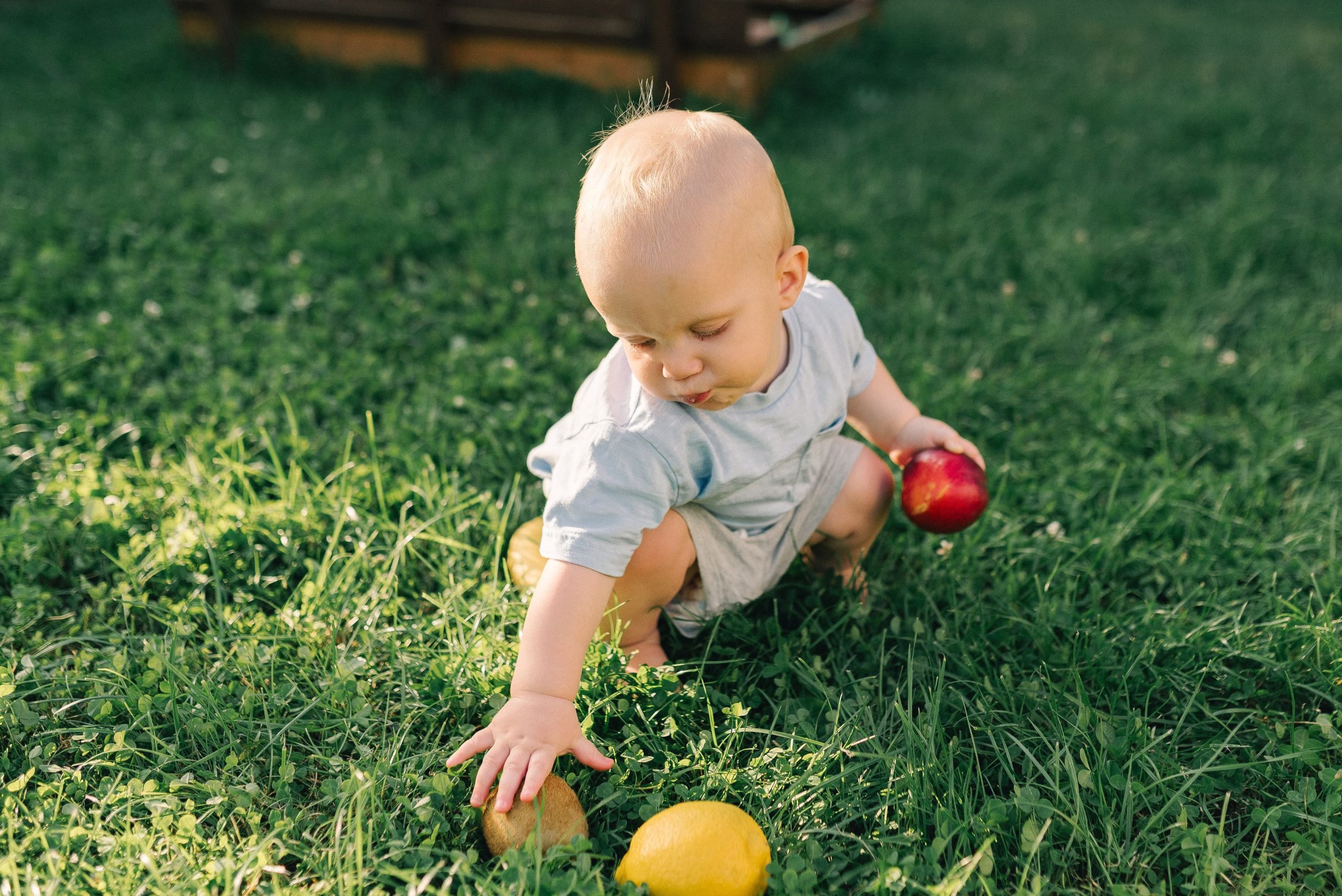
How tactile experience affects your child’s eating behavior now and in the future

Understanding how tactile experience affects eating behavior is important for parents and for professionals who work with children, because it helps to build a positive attitude to food and to prevent possible difficulties with eating.
In the first 24 months of life, children go through a whole series of important developmental stages: they learn to sit, crawl, stand, walk, talk and carry out many other complex actions. Over the same period, eating behavior is actively taking shape, as your child gradually moves from breast milk or infant formula alone to family food. Since children of this age depend on adults to be fed, the behavior of parents and their role in feeding have a decisive influence on how your child’s taste preferences and overall eating behavior develop.
Contents
What your child experiences while eating
To better understand how tactile experience affects your child’s eating behavior, it is important to look at exactly how your child perceives food — that is, how their brain processes the sensory signals that arise as they interact with food. After all, foods differ in appearance, texture, taste and smell, and it is these characteristics that determine whether your child perceives a dish as appealing or unacceptable.
What is sensory integration?
Sensory integration is a neurobiological process by which the central nervous system receives, processes, organizes and integrates information from the body’s different sensory systems: tactile, vestibular, visual, auditory, taste, smell, proprioceptive and interoceptive. The result is an appropriate response of the body to stimuli and effective interaction with the surrounding environment.
In other words, it is your child’s brain’s ability to “gather” all the signals they receive through touch, hearing, sight, movement, smell, taste and sensations from the body, and turn them into understandable information so they can respond correctly: eat, move, play, communicate. If this system works smoothly, your child adapts more easily to daily routines. If there is a disruption, your child may be overly sensitive or, on the contrary, respond too little to certain signals, which affects, among other things, their eating behavior.
How your child’s sensory systems affect the perception of food
During a meal, your child receives a huge amount of sensory information — from all the sensory systems, which work together through the mechanism of sensory integration.
Here is how this shows up in detail:
- The tactile system. Your child feels the temperature of the food — warm, cold, hot — and its texture: slippery, moist, soft, hard, both with their hands and in the mouth. They recognize whether what they touch and eat feels pleasant, or whether it causes discomfort or disgust (for example, the sticky texture of a banana or the slippery consistency of yogurt may be disliked by many children).
- The taste system. Your child recognizes the taste qualities of food: sweet, sour, salty, bitter, umami. Taste shapes their impression of a dish — whether it is pleasant, safe, familiar or new.
- The smell system. The aroma of food prepares your child for the meal and can stimulate appetite or, on the contrary, reduce it. If the smell is unpleasant or too intense, your child may refuse the food before they even try it.
- The visual system. Your child perceives the color, shape, size and presentation of food. Appearance can either encourage or put them off: “mixed” or “unclear” dishes (for example, soup with pieces in it) cause anxiety or refusal in some children.
- The auditory system. Your child hears sounds while chewing — for example, the crunch of a carrot. Sounds can be pleasant or irritating, especially for children with heightened sensitivity.
- The proprioceptive system (the sense of body position). It helps your child sense the position of the body, jaw and tongue and the force of chewing, and control the movements of the mouth. Thanks to this system, your child can chew and swallow effectively, and also hold a stable body position while sitting.
- The vestibular system (awareness of movement, balance and coordination). If it is hard for your child to keep their balance or coordinate movements, they may be restless at the table, tire quickly and have short meals.
- The interoceptive system (the body’s internal signals). Your child feels hunger, thirst, fullness, the need for the toilet or discomfort in the tummy. When this system works smoothly, your child understands when they are hungry and when they are full.
Signs of sensory processing difficulties.
Sensory processing difficulties can show up as sensory over-responsivity (hypersensitivity) or, on the contrary, reduced sensory sensitivity (hyposensitivity) to one or several types of sensory stimuli.
Children with sensory processing difficulties may show:
- refusal of food with a certain texture (for example, sticky banana);
- disgust toward “mixed” dishes that combine several textures (for example, yogurt with pieces of fruit);
- an excessive reaction to new tastes, smells or the appearance of food — even to the point of gagging or a tantrum;
- picky eating, where your child eats mostly familiar foods of a uniform texture (smooth, soft, purée-like);
- anxiety about or avoidance of situations connected with food — for example, eating at the table, going to a café or attending daycare.
Playing with food: why it matters
Sensory properties are one of the key factors shaping children’s eating behavior. Texture, in particular, is often the main reason a young child refuses a food. Research shows that certain texture characteristics can trigger disgust even before your child tastes the food – seeing or touching it is enough.
Although texture is mainly processed in the mouth, children often form their reaction before tasting – visually or through touch. Even the sounds that go with food contact, such as crunching or smacking, can affect how willing your child is to accept a dish.
In general, lumpy, grainy textures are usually less well accepted by children. About 16–22% of children aged 4–36 months show texture sensitivity: they more often refuse lumpy or grainy food. At the age of 5–12 years, these children were much more selective eaters than children without texture sensitivity.
How your child perceives food through touch
The skin of the fingers, palms, lips and tongue are the most sensitive areas for analyzing touch. On contact with food, touch receptors are activated and send signals to the brain, where these signals are combined with visual and smell signals. This forms an overall sensory impression: “this is pleasant, safe” or, on the contrary, “this is slimy, scary, confusing – better not to touch it.”
If your child has no chance to touch food — often because parents are afraid of mess or control things too much – their sensory system simply never gets to know the food. In that case, later sensory input (texture in the mouth or taste) can trigger a sharply negative reaction: disgust, crying, refusing food or even vomiting.
Why your child doesn’t like touching food
Children differ a great deal in how they perceive and accept different textures. Some adapt easily to new sensations, while others show high tactile sensitivity, which can come with an affective (emotional) reaction to touch.
Children who don’t like touching sand, grass, labels or seams on clothes often also show heightened sensitivity to food textures. They may refuse purées, slimy vegetables and foods with lumps, and become selective eaters.
Research confirms this link: children with a heightened reaction to touch refused more foods, ate fewer vegetables and rejected new food more often than children without sensory sensitivity.
When starting solid foods, children with tactile hypersensitivity may avoid feeding themselves, because some food textures make them uncomfortable. The adults’ job is to introduce different textures gently and gradually, reducing your child’s sensitivity.
Sensory play (for example, with semolina, foam, clay or water) can act as a kind of “sensory trainer” and gradually prepare your child to accept new textures. Sensory bins filled with foods of different textures have a positive effect on how those foods are accepted in the diet. However, not all children are ready to play with food right away, so at the start you can use sensory bins with non-edible items.
In such cases it makes sense to involve an occupational therapist, to support your child in a comprehensive way and reduce the risk of picky eating or other eating behavior difficulties in the future.
Why your child gets so messy at the table
On the other hand, there are children with reduced tactile sensitivity to touch, who do not “feel” certain sensory stimuli enough. They may not feel some textures, or they may actively seek out intense sensations; such children are also called “sensory seekers“.
Children with reduced tactile sensitivity often get very messy while eating: they may like it when food runs down their chin, they spit food out or throw it around a lot. These children prefer foods with a strong, intense flavor — for example, sour lemon or crunchy, firm carrot — and accordingly refuse food with a less pronounced flavor and consistency, such as puréed food.
It is important not to scold your child for this behavior, because it is not a whim but a way to feel the food and to meet their own sensory need. It is worth adding different spices to their diet to boost the flavor of foods, and also firm, crunchy foods if their age allows it. It is helpful to let them explore food with their hands, as this is part of sensory development. Activities with different textures before a meal will also help your child get the sensory input they are looking for.
It is also a good idea to see an occupational therapist or a sensory integration specialist, to help your child cope better with different textures and learn to regulate their own behavior.
Why your child does not eat vegetables
Mechanoreceptors in the tissues of the mouth are responsible for the tactile perception of food, liquids and other objects in the mouth. It is thought that heightened tactile sensitivity in the mouth allows better recognition of the textural qualities of food, which can lead to an aversion to certain textures. Children aged 6–7 years who had a high level of food neophobia were more sensitive to touch in the mouth.
Looking at tactile qualities in general, children usually dislike grainy, lumpy and slimy food, probably because such foods are difficult to manipulate in the mouth while eating.
Most neurotypical children prefer crunchy food, although this depends on the type of product and on the expectations they have formed. For example, we are used to an apple being firm and crunchy, so a soft or mealy apple is perceived as poor quality. In one study, carrots and beans were cooked in six different ways and the effect of the cooking method on children’s preferences was assessed. It turned out that the most liked options were those where the texture was crunchy. Cooking methods that made the food granular or made it fall apart, on the other hand, were liked less.
Interestingly, the two most liked dishes were also the most familiar to the children, so the choice was probably influenced not only by texture but also by how familiar and predictable the food was.
Food processing skills.
However, skills for processing food in the mouth develop at different stages of a child’s development, which affects the acceptance of a wider range of textures. These changes gradually shape how texture is perceived. This whole process is dynamic and also depends on other factors — in particular on the influence of the environment and on learning. So if your child has no negative experience, their texture preferences can gradually change — from soft, smooth and simple textures to firmer, lumpier and other more complex textures.
Once an aversion to a particular texture has formed, it becomes harder to change: it can persist into adolescence and adult life. That is why tolerating different textures is a key condition for forming eating habits in children.
These data confirm that heightened tactile sensitivity in the mouth may be one of the main reasons for refusing food with an uneven or complex texture.
This is not about stubbornness, whims or “bad parenting”. It is a sensory trait that needs gradual adaptation and caring support from parents.
How your baby learns to chew
Babies and toddlers accept soft, uniform textures (cooked vegetables) more easily than complex ones (tough meat), because the latter take more effort to chew. But with age, children start to take an interest in more complex textures: for example, children from 18 months responded to lumpy and firmer food more positively than younger ones. Between 6 and 18 months, children gradually begin to accept a wider range of textures, which depends on their chewing skills.
The development of the mouth depends on the chewing load your child gets. Learning to chew is a complex sensorimotor process that does not happen automatically; it forms gradually through experience. Chewing requires precise coordination of the muscles of the jaw, tongue, lips and cheeks.
The gag reflex
Introducing your baby to teethers before you start solid foods has a positive effect on learning to chew and reduces the gag reflex during meals.
The gag reflex is an important natural protective mechanism that helps prevent choking. It happens automatically, triggering a rhythmic contraction of the pharynx from the bottom upward, so that large pieces of food do not move further down the throat.
In babies, the area responsible for the gag reflex sits closer to the middle of the tongue. This means that even small pieces of food or a spoon can trigger the reflex. At the start of solid foods, your baby cannot yet chew and swallow well, so this reflex is common in the first months. At around 6–9 months, as your baby gradually gains chewing and swallowing skills, the reflex becomes less pronounced. The reflex area gradually moves toward the base of the tongue, closer to the throat.
Using safe, long teethers reduces sensitivity in the mouth and allows your baby to eat different textures.
Delay in introducing firm foods: consequences
Introducing food in pieces on time — at around 8–9 months, if solids were started with purées — is critically important for your child’s sensorimotor development. During this period there is a sensitive window, when the brain is most receptive to new textures. Children who were given lumpy or firm foods after 10 months were more picky about food at 15 months than children who were given firm foods at around 8–9 months. And at 7 years of age these same children remained more picky and ate fewer vegetables and fruit.
Children who meet lumpy food in pieces for the first time after their first year often accept it less well, and at least two important factors affect this.
First, in the second year of life a child enters a neophobic phase — a period when new, unfamiliar food causes wariness or refusal. Second, your child may not yet have enough chewing skills, because they had no chance to practice them early on. For example, side-to-side (lateral) tongue movements, needed to handle food in the mouth, do not develop on their own — they form depending on the texture of the food. Offering food in soft pieces, as well as long safe teethers, have a positive effect on the formation of lateral tongue movements.
When a child learns to move food from side to side in the mouth, the inside of the cheeks gradually gets used to tactile contact. If this has not happened, then when they eat textured food it lands on the tongue, and the child tries to swallow it right away, without chewing. This can trigger the gag reflex and cause disgust and fear of food later on. Children who cannot direct food with the tongue into the right position for chewing may develop hypersensitivity to touch in the cheek area. They begin to perceive any contact of food with the sides of the mouth as unpleasant, which only increases their refusal of firm consistencies.
The cycle can be reinforced by the parents’ reaction: noticing gagging or disgust, parents delay introducing firm foods, which further reduces the likelihood that the necessary motor and sensory skills will form.
So high tactile sensitivity becomes a factor that disrupts the introduction to solid textures, and can lead to long-lasting picky eating, especially with foods that have a lumpy consistency.
How to talk to your child during meals
One of the key aspects of understanding a child’s eating behavior is their ability to see food not only as a physical object, but as a sensory experience that takes shape in line with their stage of cognitive development.
According to Jean Piaget’s theory, throughout the preschool years children are at the sensorimotor and preoperational stages of thinking, when the perception of food is largely based on its outward and sensory characteristics. This means that sensory thinking – a way of getting to know the world through the senses – plays a leading role in accepting or rejecting certain foods.
The theory of cognitive development
Jean Piaget was a Swiss psychologist who developed the theory of children’s cognitive development. His theory is based on the idea that children go through four main stages of mental development, and each of them shapes how they perceive the world, including their eating behavior:
- Sensorimotor stage: from birth to 2 years
- Preoperational stage: from 2 to 7 years
- Concrete operational stage: from 7 to 11 years
- Formal operational stage: from 12 years and older
1. Sensorimotor stage (0–2 years)
Your child gets to know the world through movement and sensory perception (touch, taste, sight, hearing).
This means that your child thinks through movement, touch and physical interaction with the objects around them. From the child’s point of view, food is not simply a nutrient but a new object to explore: it has to be picked up, felt, squashed, thrown, smeared, and maybe tasted.
Through touch your child builds a “map” of food and learns its properties – temperature, shape, texture, moisture. These signals reach the brain, which reads them as safe or dangerous. If the experience is positive, your child feels interest and next time comes closer to the food more willingly.
In other words, a child of this age does not understand that a carrot is good for them; they get to know a carrot as a texture, a smell, a color, a sound, a taste. Sensory interaction is their language of learning.
2. Preoperational stage (2–7 years)
Egocentrism grows – your child believes that everyone sees the world the way they do, and does not yet understand that others may have different preferences or experiences. Children are also prone to animism – they give objects (including food) the traits of living beings: “the soup is sad”, “the cookie is angry”.
After these two stages, children move on to the concrete operational and formal operational stages, when logical thinking and an understanding of cause and effect develop. Children become better able to take in stimuli in several dimensions at once and to understand abstract concepts, for example “how healthy a food is”.
So cognitive immaturity explains why young children may refuse food simply because of its look or color, may see the same foods differently when they are served differently, and may be unable to carry a positive experience over from one food to another that is similar in taste or texture.
Jean Piaget’s theory highlights how important a child’s tactile experience with food is. It helps us understand that explaining the benefits of a food to a young child makes little sense, because at this age a child does not yet think abstractly. It is far more effective to create interesting stories and involve imagination, using the animism natural to children – the tendency to give food human traits, characters or emotions – to make getting to know new foods exciting and easy for your child to understand.
Why your baby needs to get messy when starting solid foods
When starting solid foods, your baby gets to know food not only as a source of energy, but as a new, unexplored sensory object. According to Jean Piaget’s theory, it is important to understand that between 6 and 24 months the main way a baby learns about the world is touch, not an understanding of benefits. That is exactly why the chance to touch foods, squeeze them, smear them and play with food matters so fundamentally.
Scientific evidence confirms it: tactile interaction with food helps shape healthy eating behavior in the future. Studies show that children who get the chance to explore food with their hands are less prone to picky eating, adapt better to new textures, and are more likely to develop a positive attitude toward mealtimes.
Limiting your child’s interaction with food, on the other hand, can increase sensory anxiety and lay the groundwork for picky eating or avoidance of certain foods in the future.
Children eat a new food more often after they have been exposed to its sensory properties, such as appearance, texture and/or aroma. For example, children aged 12–36 months were more likely to touch and taste unfamiliar foods after taking part in a series of activities involving exposure to the sounds, textures and smells of food.
Whatever kind of solid foods you offer – finger foods or purée – touch matters. Whether it comes from a spoon or from the hand, your baby has the right to explore food by touch, so that their brain gets enough signals: “this food is safe.”
Getting to know food is not only about nutrition. It is a process of building trust, independence and sensory development, which becomes the foundation for healthy eating habits in the future.
Tactile contact through the hands, the face, even smearing food over the body – this is a normal and natural stage of adapting to new textures and consistencies. Handling food this way is not a game or misbehavior, but part of normal development.
Tactile experience helps to:
- build a sense of safety and acceptance: touch first, then tasting;
- build familiarity through repetition: the brain registers that this food is not a threat;
- develop fine motor skills and hand–mouth coordination;
- reduce anxiety in children who tend to be sensory sensitive.
What does this look like in an example?
- your child sees a yellow piece of mango (a visual signal).
- they touch it — it is soft and a little slippery (touch).
- they notice a sweet smell (smell).
- they lick it — and the brain puts all the signals together: “This is mango. It is sweet, soft and sweet.”
Without one of these signals, full acceptance does not happen. If your child is not allowed to touch the mango and is offered a spoonful of purée straight into their mouth, they do not have time to put the sensory picture together, and the brain perceives the food as foreign.
How many times does it take for a child to accept a new food? Some children need only 1–2 introductions to calmly accept a new food, while others need 15–20 repetitions or even more before they let themselves touch it, smell it and later taste it. This is completely normal and is not a sign of “fussiness” or “poor appetite”. The main thing is not to force, but to let your child get to know the food at their own pace.
How tactile experience with food affects the development of picky eating and neophobia
Picky eating is when a child eats a limited number of foods, refusing a large share of both familiar and new dishes. Children may refuse one or several food groups, which can affect their health.
Neophobia is fear of and refusal to eat new foods, or familiar foods served in a different way. It is a physiological process that shows up in almost all children, most often between the ages of 2 and 6.
Studies show that tactile experience, in particular playing with food and other sensory activities, can help reduce food neophobia in children. As for picky eating, research indicates that taking part in sensory play can increase food acceptance in children aged 18 months to 4 years.
This suggests that sensory experience with food in childhood may reduce the risk of developing picky eating and the related eating disorders in adulthood. You can read more about feeding disorders in children in our article.
How closeness between parents and child affects eating behavior
Physical touch between a child and their parents plays an important role in the child’s emotional and physical development, which in turn affects eating behavior. Studies show that positive physical contact supports secure attachment, lowers stress and improves emotion regulation in babies.
In particular, a mother–child study found that in cases of eating disorders in older children, there were fewer affectionate touches from the mother and more negative reactions to touch from the child. This suggests that insufficient or negative physical touch may be linked to feeding difficulties in a child.
In addition, studies show that physical contact during mother–baby interaction affects the child’s later social interaction and exploration of objects. This highlights the importance of physical touch in shaping a child’s behavior, including eating behavior.
So regular, positive physical touch between parents and child supports healthy emotional development, which can have a positive effect on the child’s eating behavior.
Conclusion
So the tactile experience that starts to form in the early stages of solid foods plays a key role in how your child’s eating behavior develops later on. Getting to know a variety of textures and giving your child freedom to interact with food not only supports sensory development, it also lowers the risk of picky eating and anxious reactions around meals.
In the context of Jean Piaget’s theory of cognitive development, which stresses the importance of the sensorimotor stage (up to 2 years) as a period of learning about the world through bodily experience, your child’s interaction with food takes on special value. Food becomes not only a source of nutrients, but also a “language” for exploring the environment.
Tactile stimulation matters both through touch with the hands and through sensations in the mouth. Introducing foods of different consistencies late or in a limited way can have a negative effect not only on accepting textures, but also on the development of oral-motor skills, including speech.
Understanding this lets parents see playing with food not as bad manners, but as an important part of sensory, emotional and cognitive development. This approach helps build a safe, supportive eating environment and lays the foundation for healthy eating habits in the future.
Sources
https://pubmed.ncbi.nlm.nih.gov/15322412/
https://www.sciencedirect.com/science/article/pii/S0002916523050025
https://instsi.co.za/what-is-sensory-integration/
https://pubmed.ncbi.nlm.nih.gov/25312750/
https://www.sciencedirect.com/science/article/abs/pii/S0950329318304051?via%3Dihub
https://www.frontiersin.org/journals/psychology/articles/10.3389/fpsyg.2017.01046/full
https://www.sciencedirect.com/science/article/abs/pii/S0195666314004577?via%3Dihub
https://www.sciencedirect.com/science/article/pii/S0195666324005737
https://www.understood.org/en/articles/sensory-seeking-and-sensory-avoiding-what-you-need-to-know
https://link.springer.com/article/10.1007/s13668-017-0203-0
https://pmc.ncbi.nlm.nih.gov/articles/PMC6860515/
https://link.springer.com/article/10.1007/s13668-017-0203-0
https://pmc.ncbi.nlm.nih.gov/articles/PMC11001701/?utm_source=chatgpt.com
https://www.mdpi.com/2304-8158/14/1/69?utm_source=chatgpt.com
https://pmc.ncbi.nlm.nih.gov/articles/PMC8250458/?utm_source=chatgpt.com